CSMU Global | Chung Shan Medical University Hosts International Symposium on Lifespan Nutrition with Experts from Taiwan, Japan, and Thailand
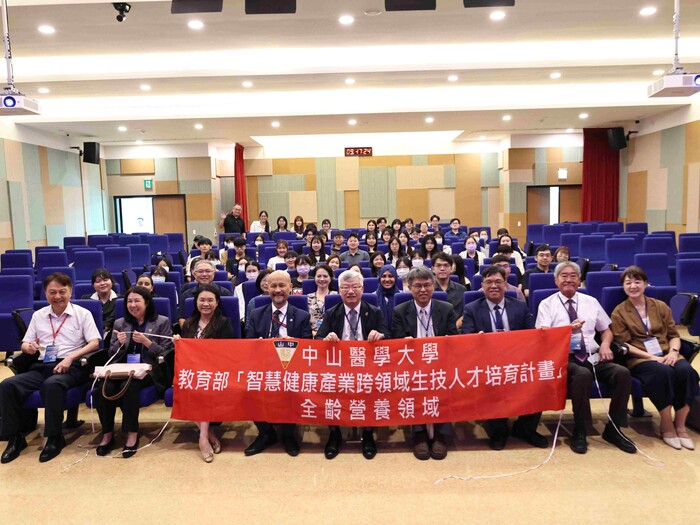
As Taiwan enters a super-aged society, meeting diverse health and quality-of-life needs across different stages of life has become a critical challenge in healthcare. Chung Shan Medical University (CSMU) hosted an International Symposium on Lifespan Nutrition on October 16, bringing together scholars from Taiwan, Japan, and Thailand to share precision nutrition strategies and healthcare practices across the lifespan.
According to the latest statistics from Taiwan's Ministry of Health and Welfare, healthy life expectancy at birth stands at 72.86 years, highlighting the growing importance of extending healthy life expectancy while maintaining a high quality of life. Supported by the Ministry of Education's interdisciplinary biotechnology talent development initiative for the smart healthcare industry, the symposium was jointly organized by CSMU's College of Health Care and Management, Department of Nutrition, and Tunghai University's Department of Food Science. Scholars from Niigata University of Health and Welfare in Japan, Chulalongkorn University in Thailand, Tunghai University, and Kaohsiung Medical University participated in lectures and poster presentations, exploring policies and clinical applications related to lifespan nutrition.
The event was attended by CSMU President Chun-Che Lin, Vice President Hsien-Ying Sung, Dean of International Affairs Ya-Hsin Li, Dean of Student Affairs Chien-Chun Lee, Dean of the College of Health Care and Management Shih-Yu Chang, Chair of the Department of Nutrition Ching-Hsien Chen, and Distinguished Professor Wen-Te Chiang of Tunghai University's Department of Food Science, along with other scholars and experts.
In his opening remarks, CSMU President Chun-Che Lin emphasized that the symposium provided an important platform for in-depth discussions on nutrition, health promotion, and chronic disease management. He expressed hope that advances in medicine and nutritional science would contribute to improving healthcare quality. Vice President Hsien-Ying Sung noted that lifespan healthcare encompasses individuals from childhood through old age. He also expressed interest in expanding future research into astronaut health, further exploring strategies to maintain human health throughout the entire lifespan.
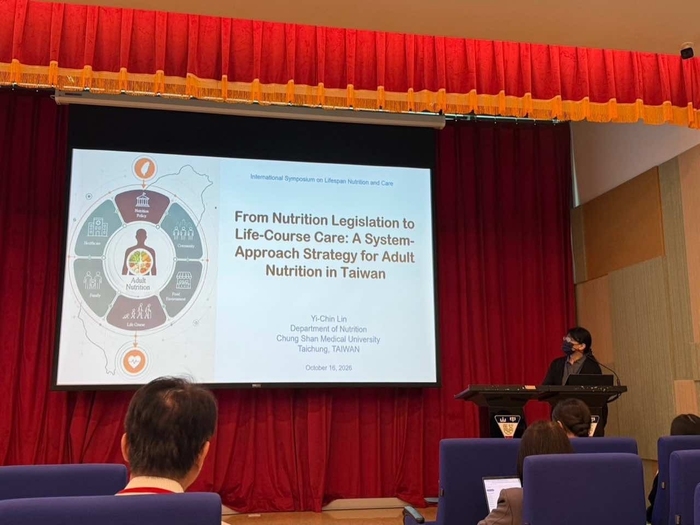
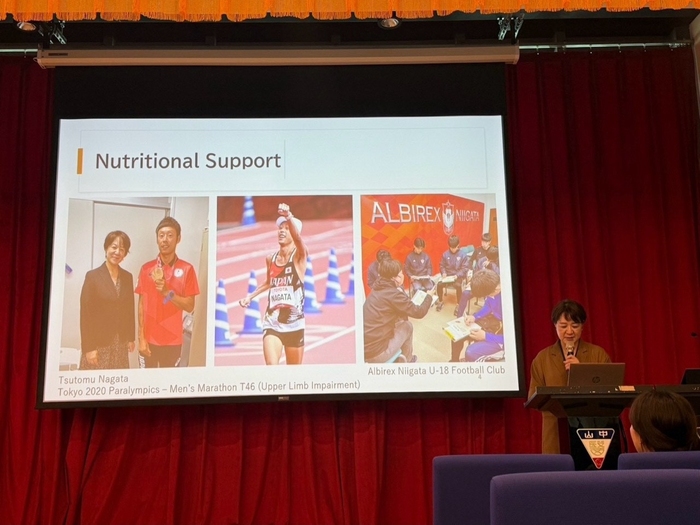
The morning sessions focused on health promotion and nutrition policy. Professor Hiromi Inaba of Niigata University of Health and Welfare discussed nutritional support for female athletes in Japan, highlighting challenges in sports nutrition and health management. Assistant Professor Yi-Chin Lin of CSMU's Department of Nutrition examined nutrition legislation and policy, presenting systematic strategies for adult nutrition in Taiwan and explaining how public health policies can be aligned with practical nutritional needs.
The afternoon sessions addressed precision nutrition in chronic disease management. Associate Professor Suwimol Sapwarobol of Chulalongkorn University presented an innovative clinical nutrition approach involving specially formulated ice cream developed for patients with pre-dialysis chronic kidney disease, demonstrating the potential of foods for special medical purposes in clinical care. Professor Meng-Chuan Huang of Kaohsiung Medical University discussed findings from a Taiwanese cohort study, examining associations among dietary patterns, glycemic control, and microvascular complications of diabetes.
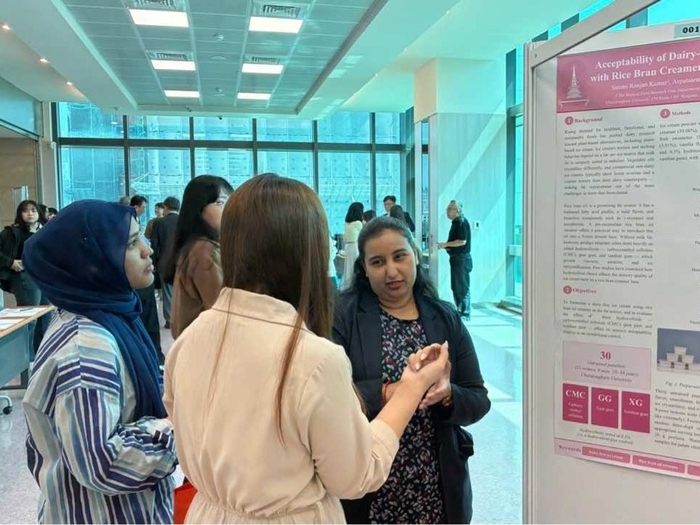
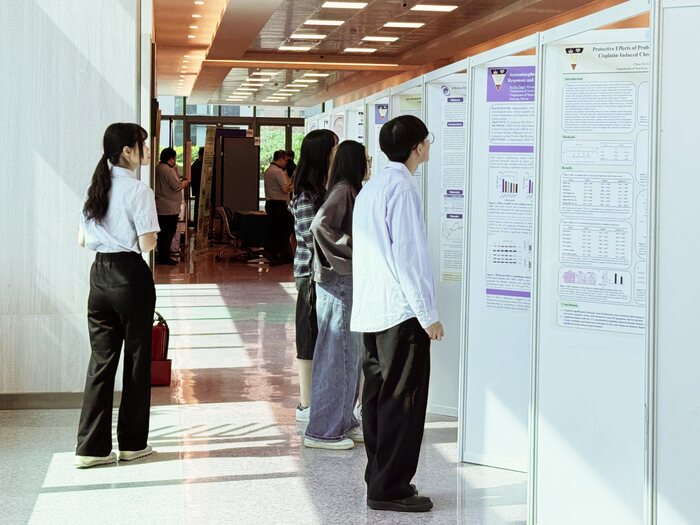
A concurrent poster exhibition showcased a range of research findings. A team led by CSMU Assistant Professor Yi-Chin Lin demonstrated the potential of the Taiwan Healthy Eating Index (T-HEI) as a quantitative tool for promoting healthy dietary practices. Associate Professor Shih-Chien Huang, in collaboration with Changhua Christian Children's Hospital, presented research investigating zinc nutritional status and antioxidant capacity among children with asthma.
Shih-Yu Chang, Dean of CSMU's College of Health Care and Management, emphasized that nutritional requirements vary significantly across different stages of life. He expressed hope that continued collaboration with international partner institutions, including Niigata University of Health and Welfare and Chulalongkorn University, would integrate interdisciplinary expertise and practical experience to provide tailored nutritional support for diverse populations and establish a comprehensive framework for lifelong health promotion.