CSMU Global | Chung Shan Medical University Focuses on Higher Education Talent Cultivation – From Low Birth Rates to the AI Era to Tackle Industrial Challenges
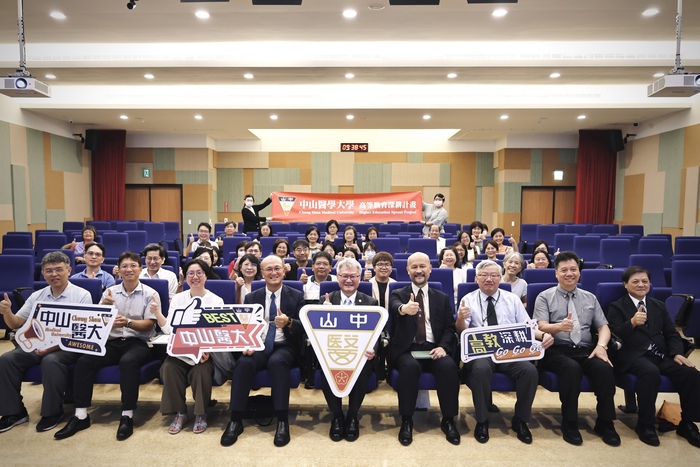
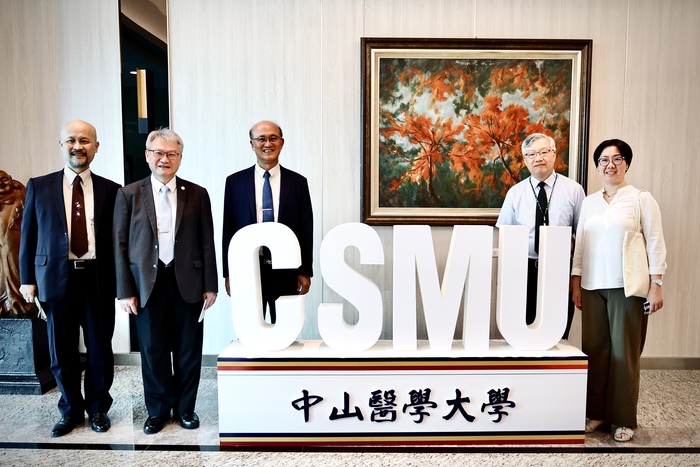
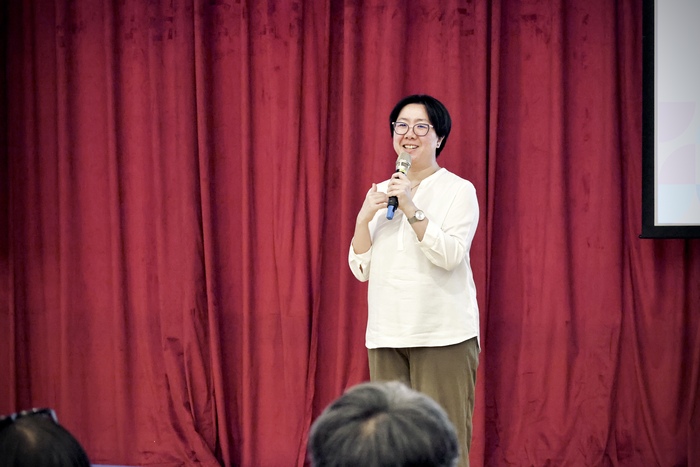
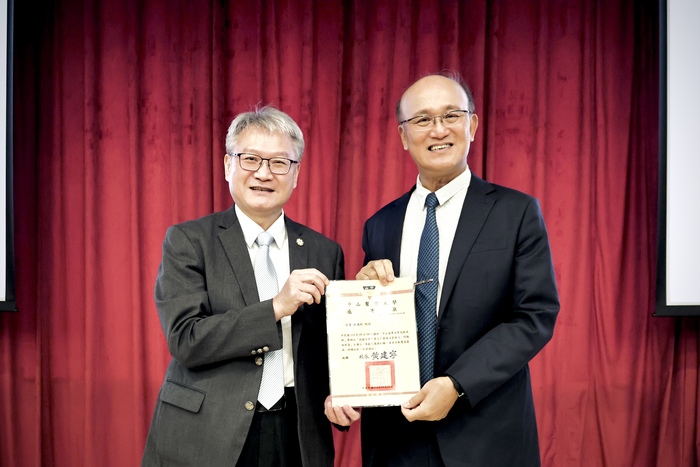
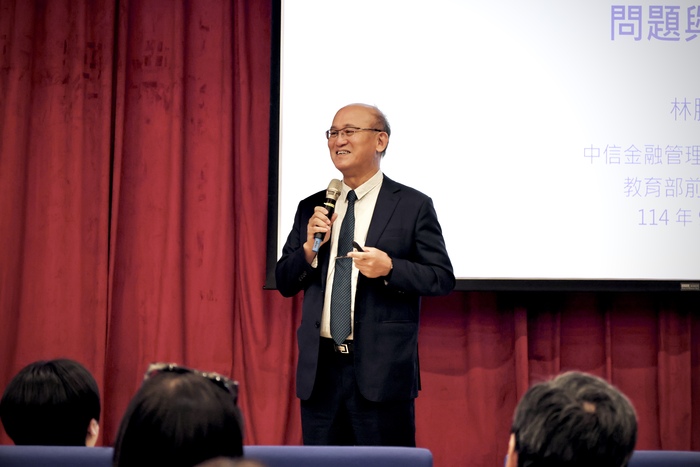
Amid the multiple pressures of declining birth rates, rapid industrial transformation, and global competition, Taiwan’s higher education talent cultivation is facing severe challenges. Today (4th), Chung Shan Medical University’s Higher Education Sprout Office invited former Executive Vice Minister of Education and current Chair Professor of CTBC Business School, Prof. Teng-Chiao Lin, to deliver a lecture titled “Current Issues and Strategies in Taiwan’s Higher Education Talent Cultivation.” Lin provided an in-depth analysis of the development of higher education, the impact of declining enrollment, gaps between learning and application, the disconnect between academia and industry, and institutional transformation. He also encouraged faculty and staff to reflect on future strategies for aligning education with industry through empirical data analysis.
The Chung Shan Medical University Foundation Chairperson Ying-Hsiang Chou remarked in her address that education must begin with “how higher education faculty perceive themselves and the future.” Only by understanding the current challenges and future trends can we truly enhance the quality of talent cultivation. President Chien-Ning Huang stressed that while declining birth rates have made student recruitment a daunting task, and even though Chung Shan Medical University achieved full enrollment this year, “Full enrollment is only the first step. What matters more is how we enhance education quality and cultivate talent that meets the needs of society.”
Lin pointed out that Taiwan’s higher education is facing several major difficulties: insufficient enrollment, gaps between learning and industry needs, an aging faculty, low international visibility, and uneven resource allocation. He recommended advancing precision enrollment and structural adjustment of universities. Beyond meeting industry demands, universities should cultivate students’ interdisciplinary and diverse competencies, strengthen industry–academia collaboration and paid internships, encourage teachers to apply AI for teaching innovation, and develop bilingual programs and joint international degrees to attract global talent and raise international competitiveness.
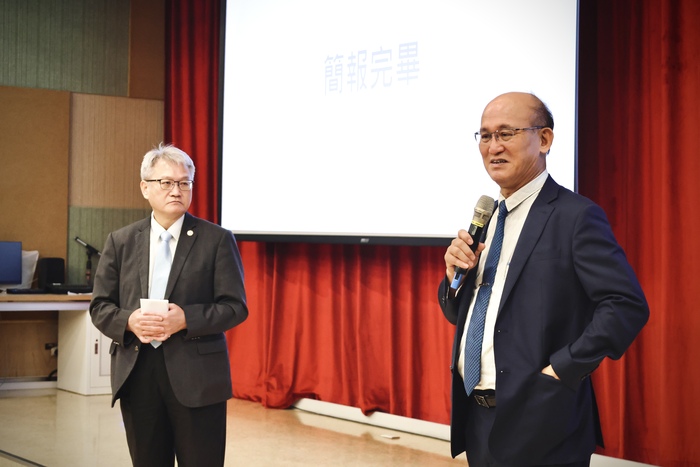
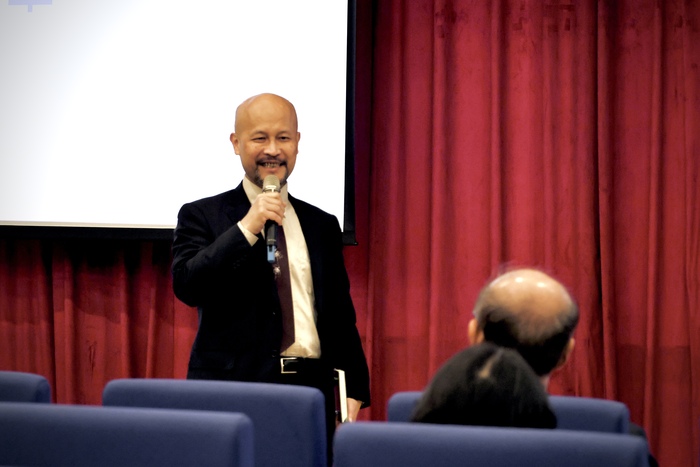
During the discussion session, President Huang asked, “How can we attract more international talent?” Lin responded that overseas recruitment must avoid risks associated with agents and suggested leveraging the Ministry of Education’s Mandarin Training Centers and admission platforms, in alignment with high schools and vocational schools, to reduce costs and challenges of independent recruitment. Vice President Shien-Ying Sung highlighted the importance of interdisciplinary development. Lin suggested establishing interdisciplinary curricula, cross-departmental course enrollment, and inter-university cooperation to foster self-directed learning, allowing students to design their own study plans and continue the spirit of autonomy cultivated in the 108 Curriculum Guidelines.
Lin concluded that the future of higher education must emphasize specialization and industry orientation. In the short term, Taiwan can address talent shortages in key areas such as semiconductors, AI, and green energy through international recruitment and industry–academia projects. In the mid-to-long term, universities must pursue departmental consolidation, inter-university resource sharing, and faculty optimization to comprehensively improve educational quality and international visibility. He emphasized: “The mission of higher education is not merely to transmit knowledge, but to cultivate talent capable of meeting future challenges.”