CSMU Global | CSMU Delegation Visits Germany to Advance Inclusive Education and Support for Students with Disabilities
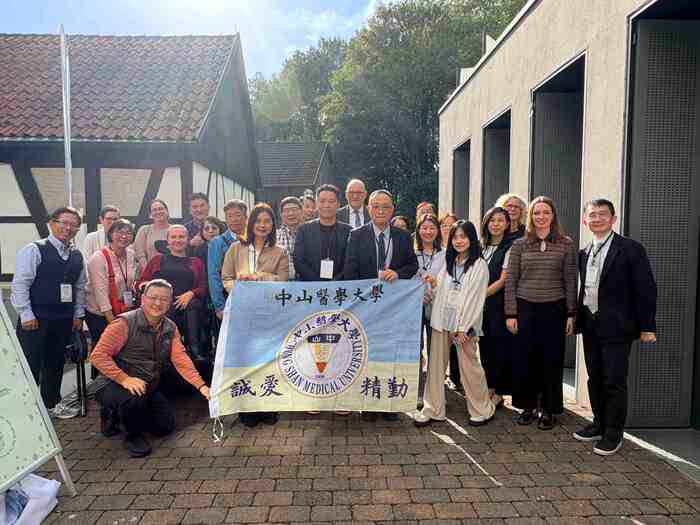
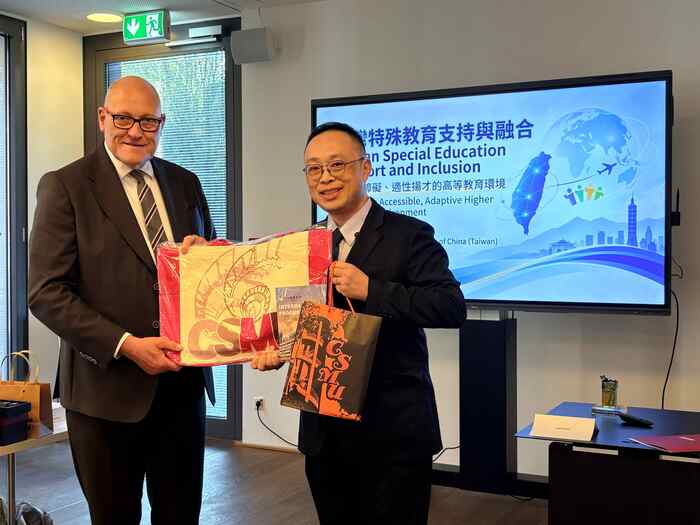
Chung Shan Medical University (CSMU) recently carried out a Ministry of Education (MOE) initiative focused on learning from international practices in inclusive education and support services for students with disabilities. Led by Dean of Academic Affairs Meng-Ru Tsai, the delegation traveled to Germany to visit TU Dortmund University, Ruhr University Bochum, the Ministry of School and Education of North Rhine-Westphalia, and REHACARE 2026.
The CSMU delegation included Professor Ching-Ying Cheng from the Department of Optometry, Associate Professor Tun-Hsin Lo from the Department of Speech Language Pathology and Audiology, Chi-Ming Shih, Director of the Assistive Technology Center at Chung Shan Medical University Hospital (CSMUH) and the MOE Assistive Technology Center for Students with Physical Disabilities, and case manager Yi-Jou Wang. The visit focused on support systems for students with disabilities and the application of assistive technologies in higher education.
Dean Tsai noted that CSMU has continued to promote an accessible and inclusive campus. The University's Cheng-Hsin Building recently received an Honorable Mention in the MOE's 2026 Outstanding Accessible Campus Building Awards. CSMU is also home to academic programs in speech-language pathology and audiology, physical therapy, occupational therapy, and optometry, complemented by the clinical resources of the Department of Physical Medicine and Rehabilitation at CSMUH.
"The purpose of this visit was to learn from Germany's experience in integrating professional services, education, and daily-life support," Tsai said. "We hope to explore ways of better integrating our existing resources to address the individual needs of students."
Shih explained that CSMUH has long collaborated with the MOE's Department of Student Affairs and Special Education to provide educational assistive technology services for students with physical disabilities. Organized by CSMU, the study visit also enabled MOE representatives and special education experts from Taiwan to gain first-hand insight into Germany's higher education support systems and assistive technology practices.
Tsai emphasized that, in accordance with the principles of the United Nations Convention on the Rights of Persons with Disabilities (CRPD), disability results from the interaction between individual characteristics and environmental barriers.
At TU Dortmund University's Department of Disability and Studies (DoBuS), the delegation learned about a university trial program that allows high school students with disabilities to experience university life before enrollment and assess the suitability of assistive technologies and course requirements in advance. DoBuS also converts learning materials into Braille, audio-described, and accessible digital formats, while students with lived experience of disability serve as peer mentors.
Drawing on these practices, CSMU plans to explore the possibility of offering orientation programs for incoming students with disabilities during summer and winter breaks. These programs could provide early guidance on accessible campus routes, compatibility testing for digital learning accounts, and trials of assistive technologies.
CSMU will also draw on the experience of DoBuS and KoBaP, Ruhr University Bochum's service for accessible examinations, to explore mechanisms for reviewing and coordinating reasonable accommodations. Potential measures include extended examination time, separate examination rooms, alternative forms of assessment, and accessible digital examination materials. The goal is to respond to students' individual needs while maintaining professional and academic standards.
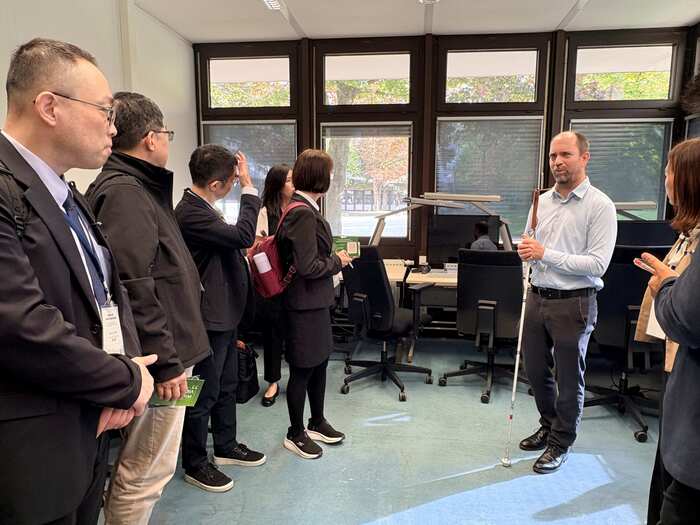
At Ruhr University Bochum's Beratungszentrum zur Inklusion Behinderter (BZI), a counseling center for students with disabilities, the delegation learned about services that handle approximately 9,000 consultations annually. These services assist students in accessing learning spaces and assistive technologies while connecting them with financial and social welfare resources.
The delegation also visited the Ministry of School and Education of North Rhine-Westphalia, where participants exchanged views on teacher support, resource allocation, and interdisciplinary collaboration.
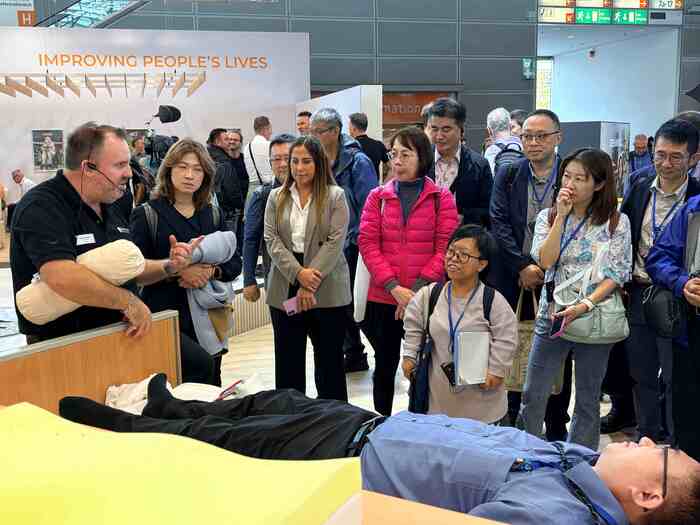
During REHACARE 2026 in Düsseldorf, one of the world's leading trade fairs for rehabilitation and care, the delegation explored innovations in mobility and transfer assistance, daily living support, communication and hearing technologies, low-vision solutions, and smart assistive devices. The visit highlighted how assistive technologies are expanding beyond medical care and rehabilitation into home care and community living.
The delegation also considered how CSMU could integrate the expertise of its four related academic departments with the clinical experience of CSMUH to strengthen assessment, treatment, learning, and daily-life support for students with disabilities.
CSMU emphasized that the essence of education lies in enabling every individual to realize their full potential. Moving forward, the University will continue to develop support measures tailored to students' individual needs, ensuring that every student can pursue their education in an environment that is respectful, safe, accessible, and inclusive.