2026/07/16CSMU Showcases Five Biomedical Innovation Themes with Startups at BIO Asia–Taiwan 2026
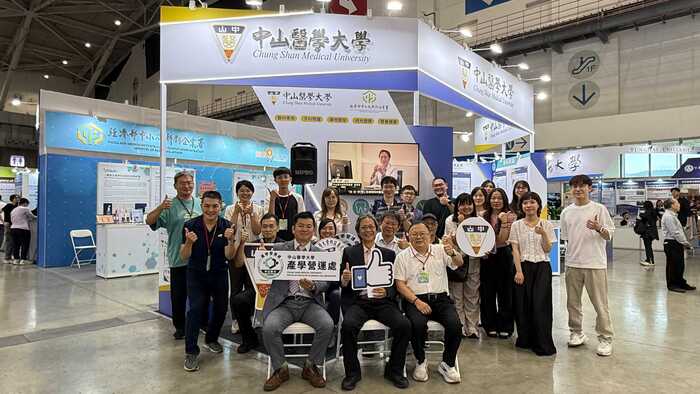
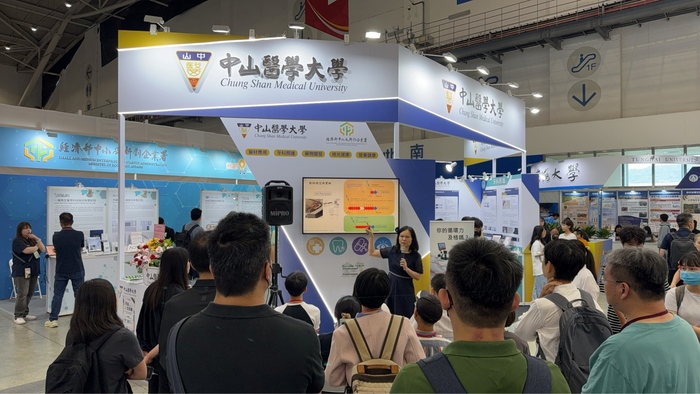
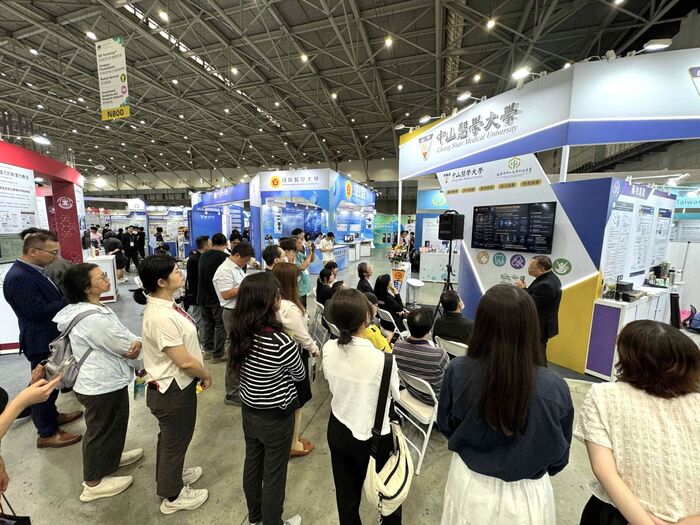
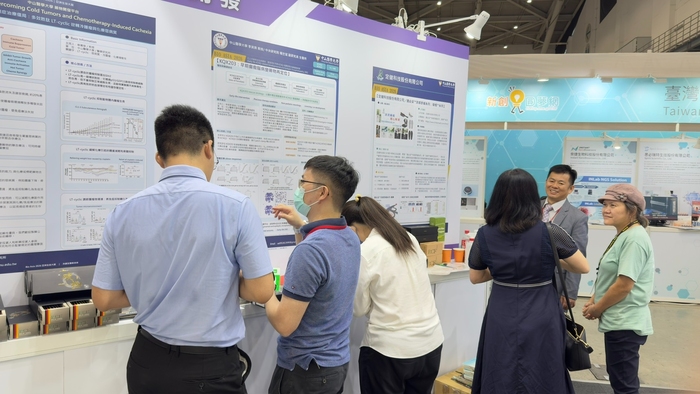
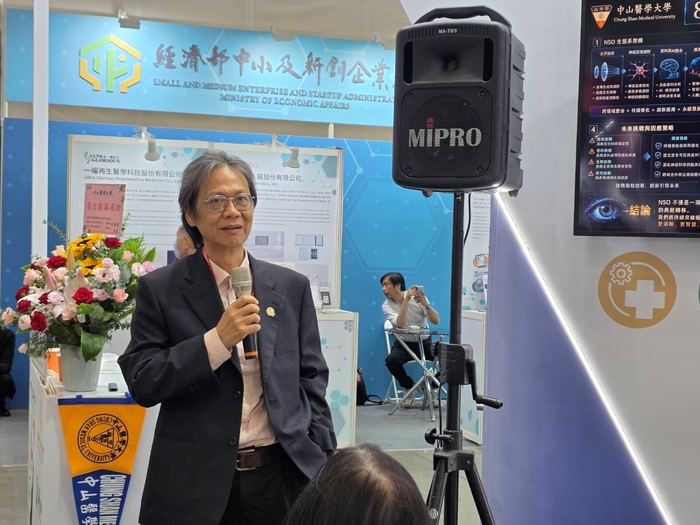
TAIPEI, Taiwan — Chung Shan Medical University (CSMU) is showcasing its latest biomedical innovations at BIO Asia–Taiwan 2026, held from July 16 at Taipei Nangang Exhibition Center Hall 1. Located at Booth N626, CSMU has brought together its research teams, affiliated hospital, spin-off companies, and incubated startups under the theme "Industry-Academia R&D × Innovative Applications × Biomedical Collaboration." The exhibition features 13 technologies and products spanning five key areas: nutritional health, vision care, drug development, medical devices, and dental care.
As the biotechnology sector continues to face challenges in translating research into commercial applications, CSMU has established a sustainable innovation ecosystem through institutional reforms and startup incubation. A key highlight of this year's exhibition is the University's translational innovation platform, developed through the 2026 SME and Startup Incubation Development Program. According to Dr. Hung-Ming Wu, Vice President for Industry-Academia Collaboration, CSMU has built an integrated innovation model that connects academic research, clinical practice, technology transfer, and startup incubation. The University is also advancing its vision of "One Department, One Technology Platform," accelerating the commercialization of research outcomes and their transition into the marketplace.
Across the five exhibition zones, CSMU is presenting 13 cutting-edge biomedical technologies and products.
In the Nutritional Health zone, Professor Ching-Lin Hsu, together with CSMU spin-off Ching Shan Biomedical, introduced a plant-based functional formula designed to support metabolism and muscle health across different age groups, addressing the growing needs of healthy aging. Professor Chao-Chung Wang presented a cognitive health supplement derived from patented lotus leaf extract, developed based on research into hippocampal neurogenesis. Meanwhile, Chi-Wen Lin, R&D Director of Super Peptide Biotechnology, showcased a bio-signal-driven peptide technology aimed at accelerating the development of pharmaceuticals and health supplements.
The Vision Care zone highlights innovative ophthalmic technologies. Lecturer Ping-Hsun Wang and ophthalmologist Dr. Chiu-Te Sung presented ophthalmic lenses featuring micro- and nano-scale surface structures, demonstrating advances in visual science and optical engineering. Professor Ching-Ying Cheng and the University's Vision Rehabilitation Center also showcased intelligent technologies for visual assessment, monitoring, and rehabilitation, promoting the development of vision enhancement and rehabilitation services.
In the Drug Development zone, Professor Ching-Hua Tsai introduced a novel cyclic peptide technology targeting cancer treatment, including strategies for reversing "cold" tumors and alleviating cancer cachexia. Pediatric neurologist Dr. Ying-Chi Lee presented research on drug repositioning for early epileptic encephalopathy, exploring new therapeutic indications for existing medications. Professor Hsiang-Shuo Huang, in collaboration with Ding Jian Technology, also showcased the Ice Relief | SpitPro™ Cooling Relief product.
The Medical Devices zone features an artificial intelligence model developed by Dr. Ming-Yu Hsieh, which utilizes deep learning and computed tomography imaging to accurately distinguish between benign and malignant tumors, improving diagnostic efficiency while reducing unnecessary surgical procedures. Alger Technology also introduced an innovative flexible connector designed to reduce the weight burden of externally placed nasogastric tubes. Combined with a pH-assisted feeding device, the system further enhances feeding safety.
The Dental Care zone presents several innovative oral healthcare technologies. Professor Chia-Tse Kao collaborated in the development of Dr. Shu Anti-Cavity & Gum Care Toothpaste, formulated to relieve gum swelling, reduce gingival inflammation, and lower the risk of periodontal disease. Dr. Liang-Cheng Chen, founder of Kyola Culture Co., introduced the Kyola Distraction System, offering a less invasive solution for wisdom tooth extraction. In addition, a patented oral healthcare product developed by Professor Shui-Yin Hsiao's research team has received patent protection in five countries. Its oral lozenges inhibit periodontal and cariogenic bacteria while supporting oral and respiratory health.
Dr. Wu noted that BIO Asia–Taiwan serves as a vital platform linking research institutions, industry partners, and the marketplace. In addition to presenting its latest research achievements, CSMU is hosting a series of industry-focused seminars throughout the exhibition. Through exchanges with biomedical companies, investors, and distribution partners, the University hopes to foster new collaborations and accelerate the commercialization of innovative technologies.